
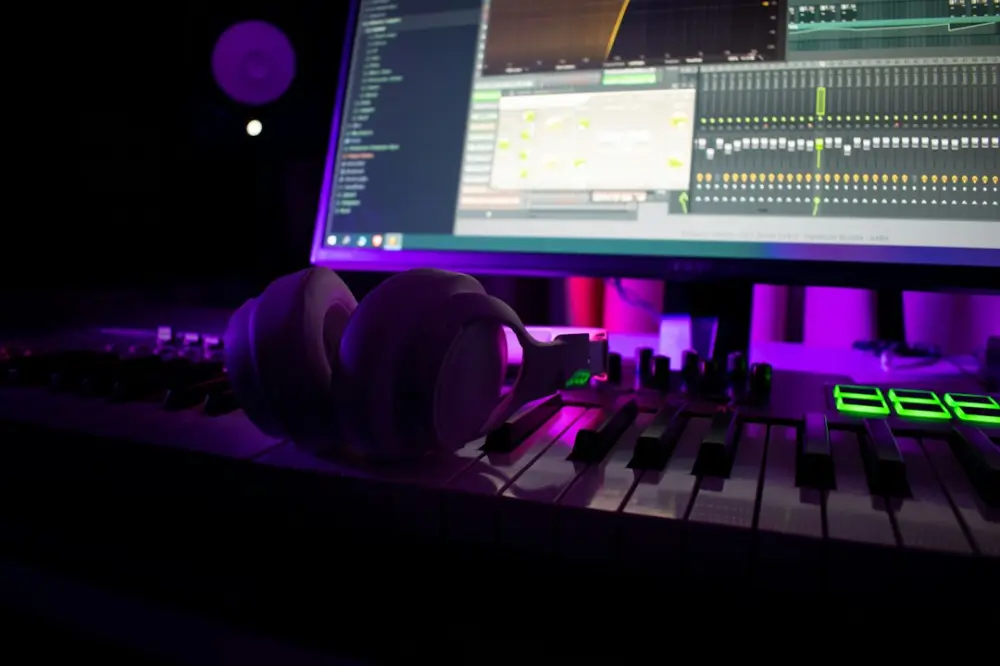
Audiobook production is the end-to-end process of converting a written manuscript into a professional audio file. In 2026, this workflow encompasses casting narrators, recording, editing, and mastering to meet specific technical standards. It ensures stories are accessible and engaging for audiences on platforms like ACX, Spotify, and Author’s Republic.
Managing this process requires a balance between technical precision and artistic direction. Whether you are working with a home studio setup or a professional engineering team, the goal is to produce a clean, consistent sound that allows the listener to get lost in the narrative without being distracted by technical flaws or uneven pacing.
What Is Professional Audiobook Production?
Professional audiobook production is more than just reading a book aloud into a microphone. It is a specialized form of performance art and sound engineering designed to sustain a listener's attention for ten, twenty, or even fifty hours. The standard for 2026 involves creating high-fidelity audio files—typically 192kbps or higher, at a 44.1kHz sample rate—that are free from distracting background noises, mouth clicks, and inconsistent volume levels.
A professional production ensures that the "room tone"—the natural sound of the silent recording space—remains consistent throughout the entire book. For example, if a narrator records the first half of a chapter in a professional booth and the second half in a spare bedroom without acoustic treatment, the listener will immediately notice the shift in airiness and echo. This breaks the immersion. Professional production mitigates these issues through controlled environments and rigorous post-production workflows.
Prerequisites for a High-Quality Recording
Before the first word is spoken, the technical foundation must be solid. In 2026, the barrier to entry for home recording has lowered, but the standard for quality has risen. You need a dedicated space with a noise floor of at least -60dB. This means that when the room is silent, the recording equipment picks up almost no ambient sound from traffic, air conditioners, or computer fans.
Essential equipment includes a large-diaphragm condenser microphone, such as the Rode NT1 5th Gen or a Neumann U87 for those with a higher budget. This must be paired with a high-quality audio interface to convert the analog signal into digital data without adding "hiss." Furthermore, the recording space requires acoustic treatment—not just egg-carton foam, but thick rockwool or fiberglass panels that absorb low-frequency bass buildup. For example, a small walk-in closet filled with soft clothing can serve as a makeshift booth, provided the narrator uses a pop filter to prevent "plosive" sounds (the harsh air bursts from letters like B and P) from hitting the microphone capsule.
The Step-by-Step Production Workflow
Managing an audiobook project involves a linear series of steps that cannot be rushed. Skipping a single stage often results in a product that fails the technical requirements of major distributors.
- Manuscript Preparation: The author or editor marks up the script. This includes noting character voices, pronunciations of unusual names, and removing elements that don't translate to audio, such as "see the chart on page 42."
- Casting: Finding the right voice is critical. In 2026, many authors are finding that full cast audiobooks are finally changing the way listeners engage with complex narratives, though a single talented narrator remains the standard for most memoirs and thrillers.
- Recording (The Session): Most professionals use the "Punch and Roll" technique. When the narrator makes a mistake, they stop, back up the recording to a natural pause, and record over the error immediately. This saves hours of editing time later.
- Post-Production (Editing and Mastering): This is where the "raw" audio is polished. Editors remove long pauses, stomach growls, and mouth clicks. Mastering engineers then apply equalization (EQ) and compression to ensure the volume is consistent and meets the -23dB to -18dB RMS requirements.
- Quality Control (Proofing): A "proofer" listens to the finished audio while reading the manuscript to ensure no words were skipped or mispronounced.
Human Narrators vs. AI Synthesis Tools
As we move through 2026, the choice between human narrators and artificial intelligence synthesis has become a primary consideration for many indie authors. AI voices have become remarkably fluent, capable of handling straightforward non-fiction or technical manuals with high efficiency and low cost. However, for fiction and deep narrative non-fiction, the emotional resonance of a human performance remains unmatched.
AI often struggles with subtext. A human narrator understands when a character is being sarcastic, mournful, or deceptive, adjusting their cadence and micro-expressions accordingly. We believe we still need the human soul to truly bring a story to life. For example, a thriller featuring a tense standoff requires a specific type of breathy, whispered delivery that AI still tends to flatten into a generic "tense" preset. While AI is a tool for accessibility, human narration remains the gold standard for prestige storytelling.
Navigating ACX and Global Distribution
Once the audio files are mastered, they must be distributed. ACX (Audiobook Creation Exchange) remains the primary gateway for Amazon and Audible, but it is no longer the only viable path. In 2026, wide distribution is favored by many creators to reach listeners on Spotify, Apple Books, and library apps like Libby and Hoopla.
Distributors like Findaway Voices and Author’s Republic allow you to upload your files once and send them to dozens of global platforms. Each platform has strict technical specifications. For instance, ACX requires each file to have between 0.5 and 1 second of silence at the beginning (the "head") and between 1 and 5 seconds of silence at the end (the "tail"). If your files are 191kbps instead of the required 192kbps, the automated system will reject them instantly. For example, a common workflow involves using a "Validator" tool to check these specs before attempting the upload, saving days of back-and-forth with support teams.
Common Production Mistakes to Avoid
The most frequent error in audiobook production is inconsistent audio quality across chapters. This often happens when a project is recorded over several weeks. If the narrator’s position relative to the microphone changes by even two inches, the "proximity effect" will change the bass levels in their voice. To avoid this, professionals use a "spacer"—literally a piece of string or a fixed physical marker—to ensure their mouth is the exact same distance from the mic every session.
Another mistake is over-processing the audio. While it is tempting to use heavy noise reduction software to fix a noisy room, doing so often leaves the voice sounding "underwater" or robotic. It is always better to fix the room acoustics than to try and fix the audio in post-production. For example, using a gate to cut out all sound between sentences can create an unnatural "vacuum" effect that is jarring to the listener. A soft, consistent room tone is always preferable to dead silence.
Why Quality Audio Matters for Your Audience
The relationship between an audiobook and a listener is incredibly intimate. Unlike a movie or a physical book, the audio is piped directly into the listener's ears, often for hours at a time during commutes or household chores. Any friction in that experience—a sharp S-sound (sibilance), a sudden volume spike, or a poorly timed edit—is amplified. High-quality production respects the listener's time and attention.
In 2026, the marketplace is crowded. A book with poor audio quality will receive negative reviews that focus on the production rather than the story. Conversely, a well-produced book can elevate a simple story into a cinematic experience. At Me Gusta Escuchar, we focus on these technical nuances because they are the bridge between a writer’s imagination and a listener’s reality. By mastering the practical steps of audiobook production, you ensure that the human element of storytelling remains front and center, regardless of the technology used to deliver it.